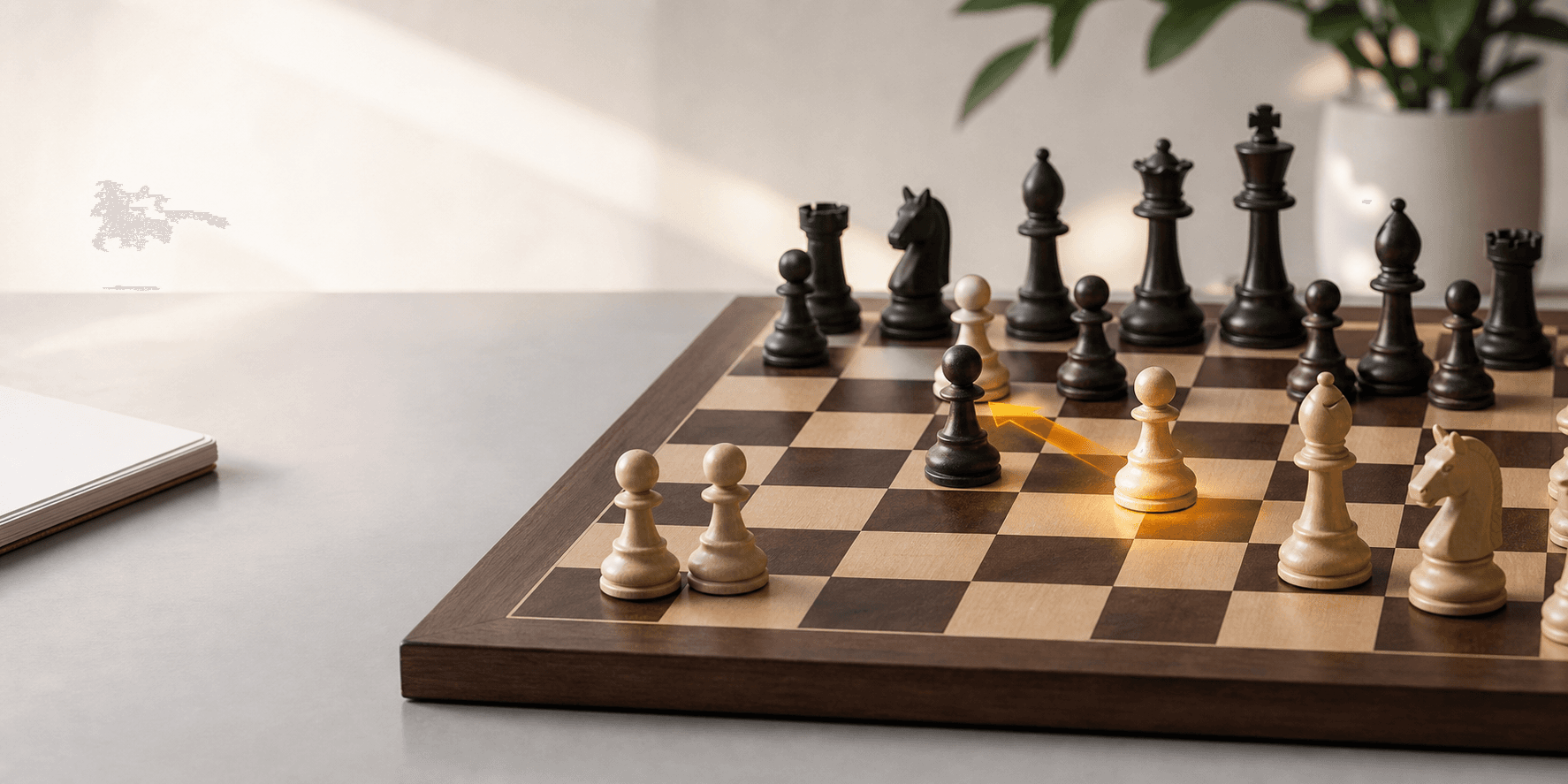
French Defense
IntermediateThe French Defense (1.e4 e6). Black answers 1.e4 with a pawn chain (e6, d5). The one catch: Black's light-squared bishop gets boxed in behind the e6-pawn. Unlike in the Caro-Kann it can't just come out, so Black has to free it another way. In return for the 'bad bishop,' Black gets a solid, resilient structure and a clear, repeatable plan: strike at White's pawn centre with two standard pawn breaks.
hit White's pawn chain with your two breaks — ...c5 against its base (the d4-pawn) and ...f6 against its head (the e5-pawn).
That opens files and diagonals for your knights, rooks and dark-squared bishop. The light-squared bishop is a separate job: the breaks don't free it, so either trade it off (...Bd7, or ...b6 and ...Ba6) or play the open lines (the Exchange and Tarrasch), where ...exd5 opens its diagonal.
Key Strategic Ideas
Before the individual variations, here are the ideas behind every French line: a pawn chain, one problem piece, and two pawn breaks. Once you know these, the specific lines mostly play themselves.